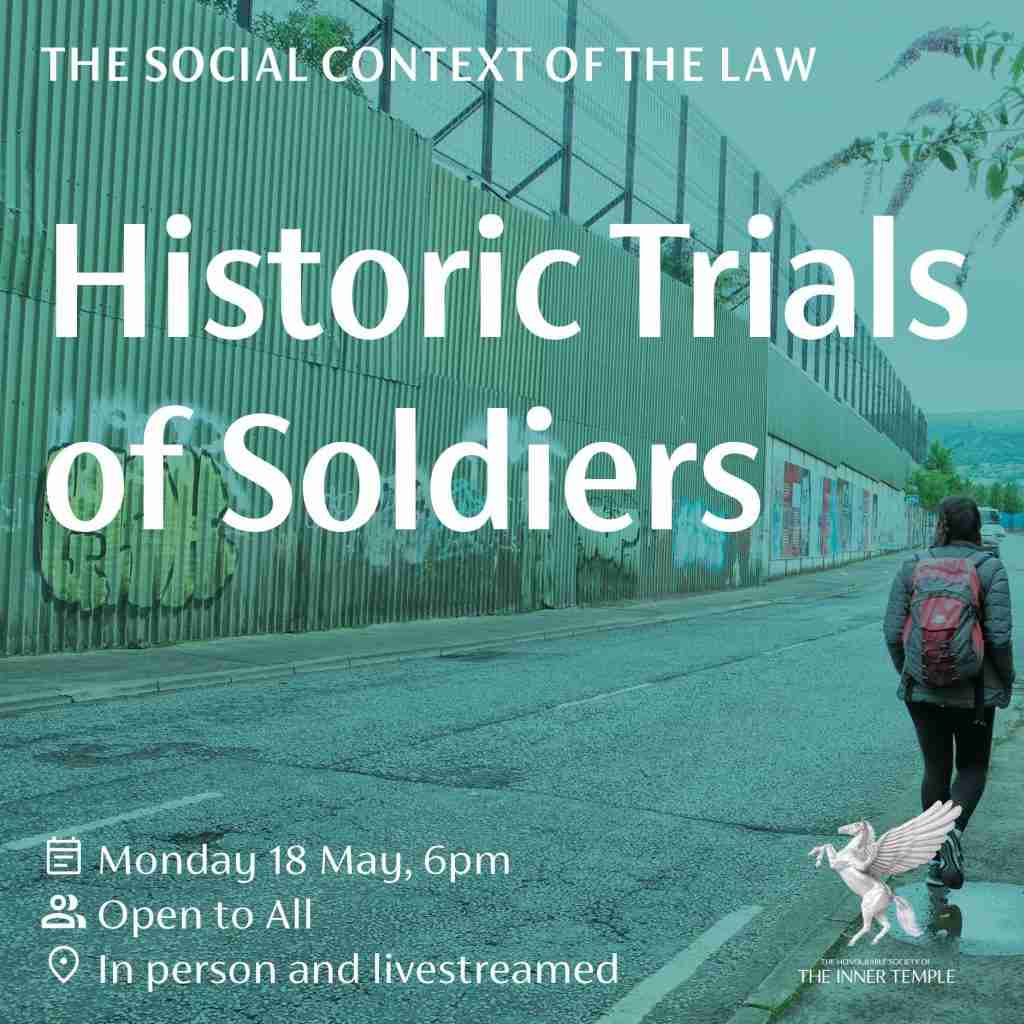
The Honorable Society of the Inner Temple, a prestigious professional association of barristers and lawyers that dates back to the 14th century, hosted ‘Historic Trials of Soldiers’, a timely panel discussion examining one of the most complex legal and moral questions arising from the legacy of the Northern Ireland Troubles.
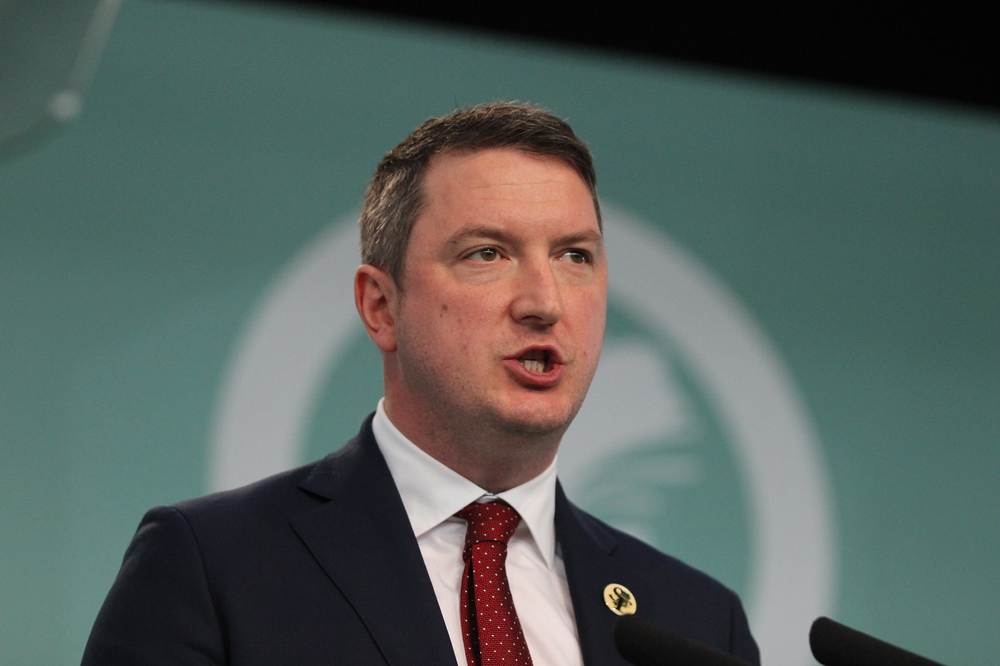
The panel included Sinn Féin’s John Finucane MP who discussed recent Legacy legislation and the impact it has on the Good Friday Agreement. His remarks for the event are below:
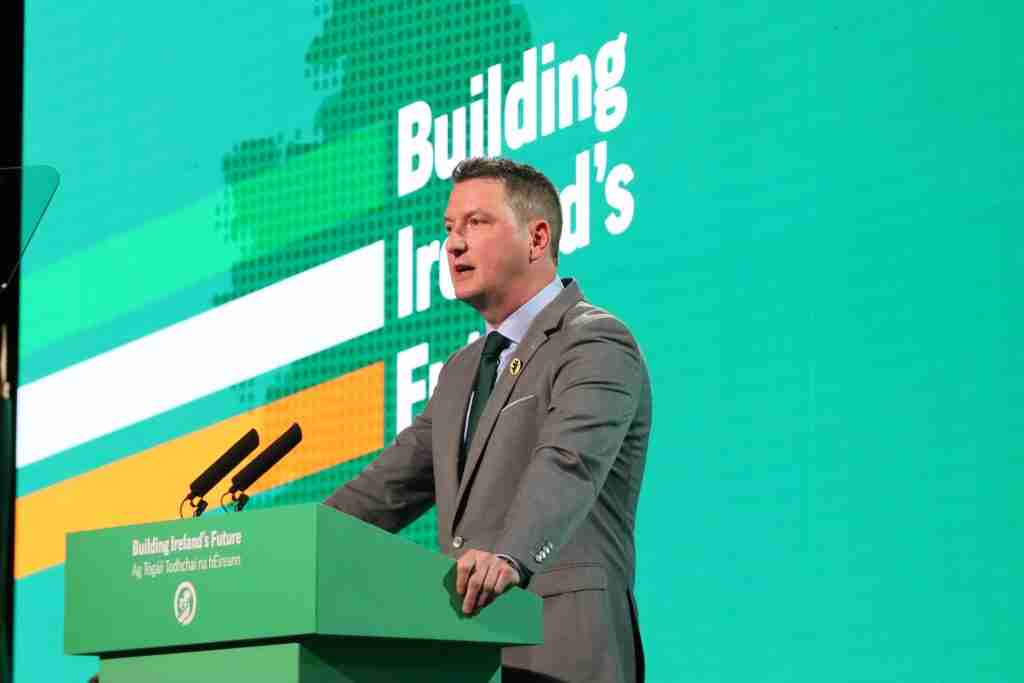
Thank you very much to the Inner Temple, to the Treasurer Helen Davies KC, to Sir Geoffrey Nice KC and to all involved in organising this evening’s discussion.
The title of tonight’s event is “Historic Trials of Soldiers”.
And perhaps that is where I might begin.
Because one of the difficulties in legacy discourse, not just here in Britain but more broadly, is that the conversation has increasingly become framed almost exclusively around whether former soldiers should continue to face investigation or prosecution decades after the conflict.
That is now clearly an issue requiring to be addressed.
But it is not the only issue.
Nor, in my view, is it the central issue.
The deeper question is whether any democratic society genuinely committed to the rule of law can credibly maintain that state actors should enjoy a lesser degree of scrutiny or accountability than anyone else involved in a conflict.
That is not an anti-military position.
It is a constitutional one.
And it is important to state clearly that we are speaking about a very small percentage of the many thousands of British military and intelligence personnel deployed to Ireland over a period spanning almost forty years.
But where there exist credible allegations of murder, collusion, unlawful killing or serious criminal wrongdoing, those matters must be capable of independent scrutiny and lawful investigation.
That principle should not become controversial simply because the suspect wore a uniform.
And yet increasingly, that appears to be precisely what parts of this debate are attempting to establish.
It cannot seriously be disputed that unlawful killings occurred during the conflict.
Nor can it seriously be disputed that in many cases there was collusion between state agencies and loyalist paramilitaries, and indeed in some instances with republican actors also.
These are no longer matters of political allegation. They are matters established across inquiries, inquests, judicial findings, ombudsman investigations and official state reports.
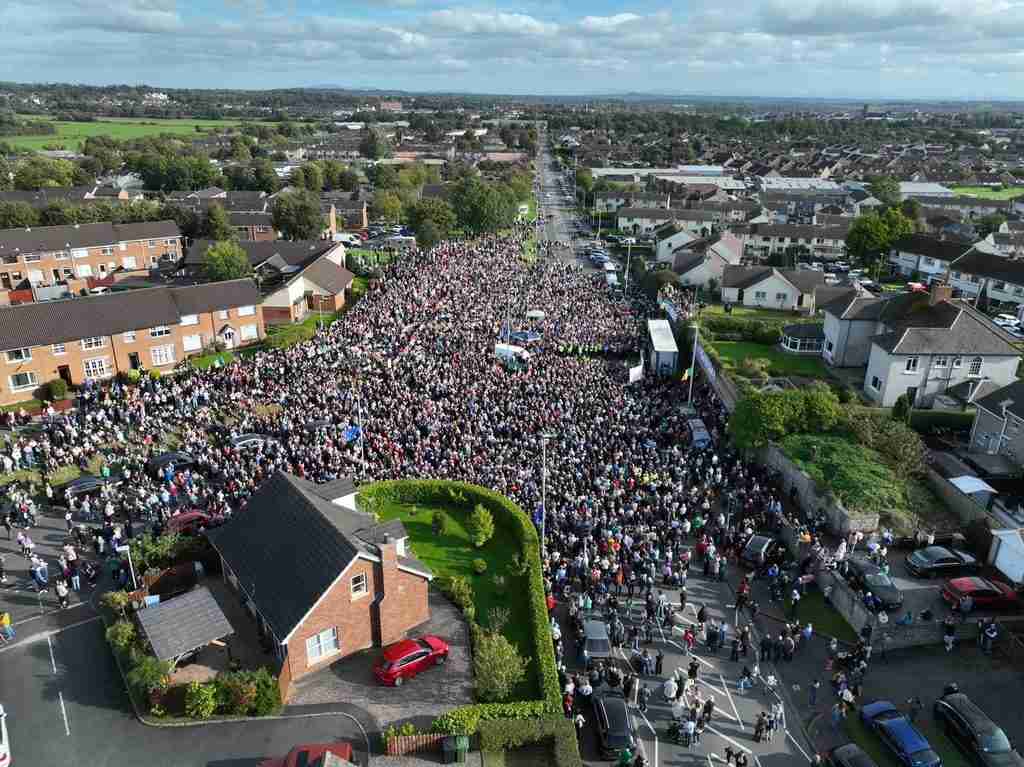
Indeed, in relation to the murder of my own father, Patrick Finucane, then British Prime Minister David Cameron formally apologised on behalf of the British State and referred to what he described as “shocking levels of collusion”.
And it is important to remember what we are speaking about here.
Patrick Finucane was a solicitor. An officer of the court. A defence lawyer deeply engaged with the legal system and the rule of law.
He was murdered at the behest of agents of the State.
And his murder was then surrounded by decades of obstruction, denial and concealment.
That was not the language or conclusion of activists or campaigners. It was the considered position of the British Government itself.
Yet despite that acknowledgement, there has never been meaningful accountability for the broader system of collusion surrounding his murder, or indeed many others.
One individual was convicted, a man who had confessed his role on tape to a journalist, but there has been no military accountability, no security service accountability and no political accountability.
And I think that goes directly to the heart of why these issues remain unresolved decades later.
Families did not create the passage of time.
Families did not create delay.
Families did not create flawed investigations.
Families did not create disclosure battles, destroyed records, intelligence obstruction or institutional resistance.
Very often, the reason these cases remain live today is because the original processes lacked independence, credibility or rigour.
Bloody Sunday is one such clear example.
The Widgery Tribunal was presented at the time as authoritative and conclusive. Yet decades later the Saville Inquiry fundamentally dismantled its conclusions and established that those killed were unarmed and that the shootings were unjustified and unjustifiable. Indeed, it is worth remembering the British Government’s own stated position when establishing the Saville Inquiry:
‘Bloody Sunday was different because, where the State’s own authorities are concerned, we must be as sure as we can of the truth, precisely because we pride ourselves on our democracy and respect for the law.’
Many other examples could equally be cited.
Ballymurphy.
Springhill.
Collusion cases.
Delayed inquests.
Repeated findings that original accounts given by state actors were inaccurate, misleading or untrue.
The question therefore is not simply:
“Why are these cases still being examined?”
Or indeed:
“Why are soldiers and state actors still at risk of investigation?”
The more important question is:
“Why did so many families have to wait half a century for the truth in the first place?”
And I think we also need to examine very carefully some of the language increasingly used in this debate.
Terms such as “vexatious prosecutions”, “witch hunts” and “lawfare” are now routinely deployed, usually without challenge.
But prosecutions in our system are not determined by newspaper editorials or political campaigns.
They arise through independent prosecutorial processes applying evidential tests and public interest standards.
Our coronial and civil systems equally operate with extensive safeguards, scrutiny and judicial oversight.
Indeed, only days ago the Secretary of State himself expressly rejected the notion of politically motivated or vexatious prosecutions and reaffirmed the constitutional principle of prosecutorial independence.
And the actual prosecution figures themselves are worth reflecting upon.
Since the Good Friday Agreement, there has been one conviction of a former soldier connected to the conflict.
One.
And no custodial sentence followed.
The Secretary of State also confirmed that of the current live prosecutions relating to the conflict, the overwhelming majority concern non-state actors.
That reality sits in stark contrast to the public narrative here, that former soldiers are uniquely persecuted by the legal system.
And it is also worth recalling that in the handful of cases where British soldiers were convicted of murder during the conflict, those individuals were released early and returned to military service.
Again, these are simply historical facts.
Now none of this means that prosecutions and investigations should proceed unfairly.
Every suspect, whether republican, loyalist, police officer, intelligence agent or soldier, is entitled to the full protections of the law:
the presumption of innocence,
fair trial rights,
due process,
and all protections afforded by age, health and evidential standards.
But accountability before the law cannot become conditional upon the identity of the suspect.
And I think that is where some of the historical asymmetry in this debate becomes important.
Academics estimate that during the conflict more than 15,000 republicans were imprisoned, alongside many thousands of loyalists.
The British State demonstrated enormous capacity to surveil, investigate, detain, interrogate and prosecute.
At the same time, however, the State itself occupied an entirely different position from every other actor in the conflict.
It controlled policing.
It controlled intelligence.
It shaped emergency legislation.
It shaped the legal framework through which the conflict was administered.
And in many respects it shaped the architecture of accountability itself.
That distinction matters enormously.
Because this is not simply a debate about individual soldiers.
It is a debate about whether the State itself can ever be meaningfully accountable before the law when the State is also the institution defining the limits of accountability.
And that is why these issues cannot simply be dismissed as an internal sovereign matter for Westminster.
The peace process itself was built upon international agreement, bilateral obligations and human rights commitments.
The Good Friday Agreement and subsequent agreements such as Stormont House carried constitutional and international significance.
And that context is often conspicuously absent from political discussion in Britain.
We are now again in the midst of attempts to reshape legacy mechanisms through legislation and structures such as the ICRIR.
And there remain profound concerns around disclosure, independence, public confidence and whether families will ever receive a process genuinely capable of commanding their trust.
The recently published, government commissioned, May Review into the ICRIR only deepened many of those concerns.
And I think there is a very real concern within Ireland that parts of this debate increasingly seek to recast victim-makers as victims themselves.
Because one of the striking features of contemporary legacy discourse is the extent to which those implicated in serious state wrongdoing are increasingly spoken about primarily through the language of vulnerability, exposure and victimhood.
If identical arguments were being advanced to prevent accountability for those implicated in attacks in Birmingham, Guildford, Warrington or London, I suspect many people would view that proposition rather differently.
And perhaps that is why comparisons with cases such as Hillsborough or the murder of Stephen Lawrence are important.
Because British society itself recognises the profound damage done when institutions close ranks, when truth is delayed and when families are forced to spend decades fighting for credible processes.
This is not about rewriting history.
It is about correcting it.
And ensuring that families who waited decades for truth are not now told that accountability itself has become the problem
And providing families, many for the first time, with the possibility of achieving truth through processes capable of commanding public confidence.
Indeed, the rule of law matters most when the conduct under scrutiny is that of the State itself.
Ultimately, I suspect most families affected by the conflict understand that no legal process can undo their loss.
But many still believe, entirely understandably, that truth, accountability and equal application of the law remain essential if reconciliation is to have any durable or credible foundation.
And the real test for any democratic society is not whether it applies those principles when it is easy or politically convenient.
It is whether it is prepared to apply them consistently even when the scrutiny falls upon the State itself.
GRMA, Thank you.